Coast towns · Biloxi
soundBiloxi beyond the casinos
Behind the towers on the beach road is an old fishing town: a lighthouse in the middle of the highway, shrimp boats, schooners and a long history of storms.
Biloxi is best known for the large casino resorts along its waterfront, and they are hard to miss. But the city is far older than its gaming industry. It grew as a fishing and seafood town, and in the late nineteenth and early twentieth centuries it was one of the busiest seafood ports in the country. That older Biloxi is still there if you look for it.
The name comes from the Biloxi people, who lived along this coast before Europeans arrived. French explorers reached the area at the end of the seventeenth century, and for a short time in the early eighteenth century the Biloxi area served as the capital of French Louisiana before the seat moved to New Orleans. The town that grew up afterward sits on a narrow peninsula, with the sound to the south and the Back Bay to the north, so water is never far from any street.
A lighthouse in the middle of the road
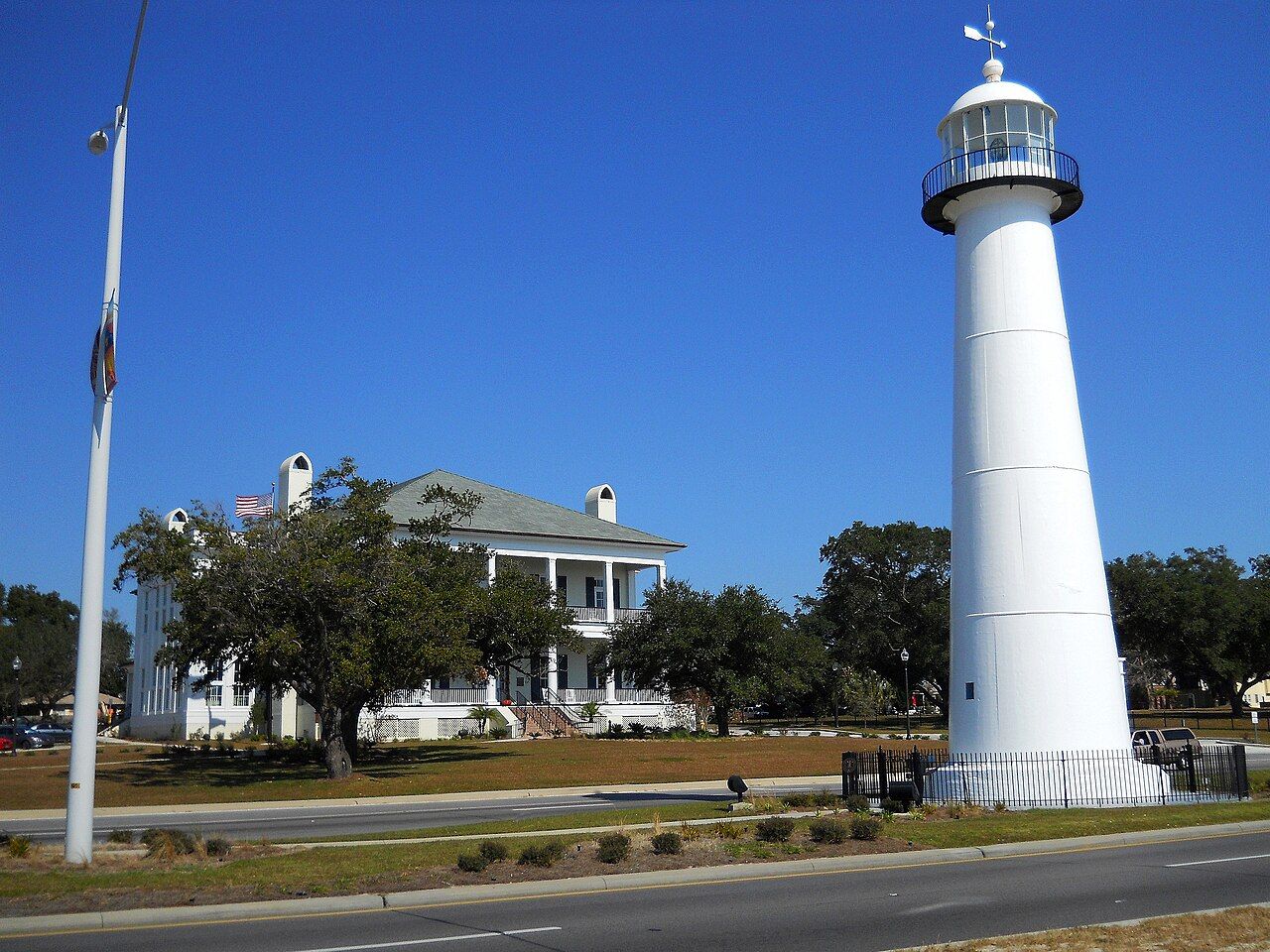
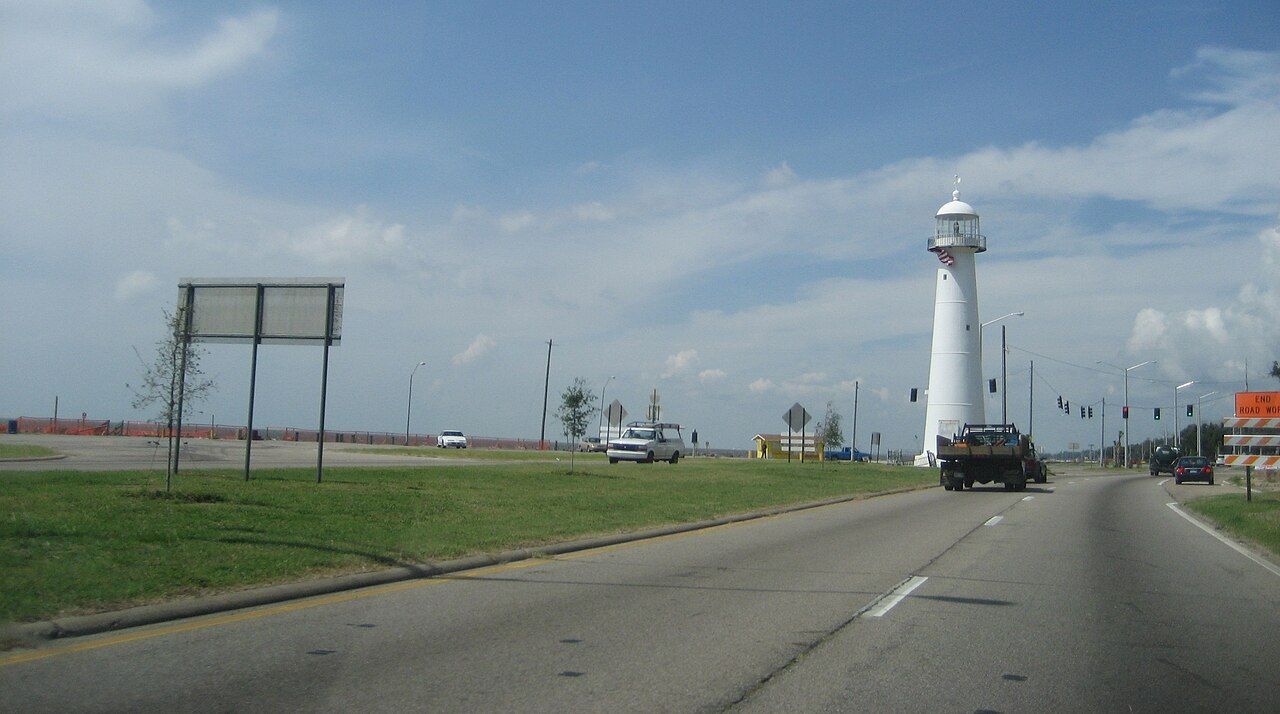
The Biloxi Lighthouse is the city's best-known landmark, and it stands in an unusual place: in the median of US 90, the beach road, with traffic flowing on both sides. Built in the 1840s of cast iron, it is one of the older cast-iron lighthouses on the Gulf Coast.
It has survived many hurricanes, including Camille in 1969 and Katrina in 2005. After Katrina it was damaged but left standing, and it became a symbol of the city's recovery. It has since been restored, and tours have been offered at times.

Across the road stands the visitor center, built after Katrina in a style that recalls the grand houses that once lined the beach. It is a good place to pick up maps and ask about local events.
Point Cadet and the seafood heritage
At the eastern tip of the Biloxi peninsula is Point Cadet, the historic heart of the seafood industry. Here, immigrants from many places worked in canneries and on boats: families of French, Croatian, Polish and other origins, and later Vietnamese families who arrived from the 1970s onward and became a major part of the shrimping fleet.
The Maritime and Seafood Industry Museum tells this story through boats, photographs and tools, with exhibits on shrimping, oystering and boatbuilding. Shrimp boats still work out of the harbors, and the seafood of the coast remains part of daily life in the city.
In spring, Biloxi holds a Blessing of the Fleet, a long-standing tradition in which decorated boats parade past a priest who blesses them for the season ahead.
The oyster schooners
For decades, Biloxi was known for its schooners: graceful, two-masted sailing boats used to dredge oysters in the Mississippi Sound. They were fast, shallow enough for the sound, and so common that they became a symbol of the town.
Engines replaced sail in the twentieth century, and the working schooners disappeared. In recent decades replicas have been built to keep the tradition alive, and they can sometimes be seen under sail in the sound, especially during festivals. The maritime museum is the place to ask about them.
Further down the waterWest Ship Island and Fort MassachusettsFrom the beach you can look out across the sound toward the barrier islands on the horizon. The guide to West Ship Island and Fort Massachusetts explains how to reach the nearest of them.
Beauvoir
West of downtown, on the beach road, is Beauvoir, the last home of Jefferson Davis, president of the Confederacy. The raised cottage, built in the 1850s, is now a museum and historic site with a library building, gardens and a cemetery.
Beauvoir was badly damaged by Hurricane Katrina and restored afterward. It is a historic house that reflects a difficult period of American history, and visitors come with many different perspectives. Check the museum for current hours and exhibits.
The beach and the back bay
Biloxi's beach runs for miles along US 90. It is a man-made beach, built in the twentieth century to protect the seawall, and the water of the sound is shallow and calm. It is a good place for a walk at sunrise or sunset, when the light is soft and the heat is lower.
Just offshore lies Deer Island, a long, low island of pines, marsh and sand that is publicly owned and protected as a coastal preserve. It can be reached only by boat and has no facilities, but even from the beach it frames the view and gives the sound a sense of shelter. Herons, pelicans and ospreys use its shores, and its trees are a landmark for anyone on the water.
On the northern side of the peninsula is the Back Bay of Biloxi, a quieter world of bayous, marsh and fishing docks. Several rivers and bayous feed it, and herons and egrets hunt along its edges. The guide to living on the bayou describes this kind of landscape in more detail.
- Heat: summer days are hot and humid. Walk early or late, and carry water.
- Storms: afternoon thunderstorms are common in summer. Leave the beach when you hear thunder.
- Jellyfish: they appear in the sound at times, especially in late summer. Look before you wade.
- Hurricane season: June to November. Follow official advice if a storm approaches.
For a longer day, follow the beach road east across the bridge to Ocean Springs, a smaller town of oaks and art just across the bay.
Biloxi's casinos are one part of the city, but the lighthouse, the boats and the stories of the people who built the seafood industry are what make it worth a slower look.