The Pascagoula River · Moss Point
riverMoss Point, where the Escatawpa meets the Pascagoula
A small Jackson County town built on lumber and river traffic, at the meeting of two rivers, with cypress swamp upstream and open marsh down toward the Sound.
Drive south off Interstate 10 toward Pascagoula and, before you reach the shipyards and the Sound, you cross a lot of water. Bridges carry you over channels, marsh and the dark slow bends of two rivers. This is Moss Point, a town that grew where the Escatawpa River runs into the Pascagoula, and it is still easiest to understand from the water's edge.
It is not a big place, and it does not try to be one. What it offers is position: you are at the lower end of the Pascagoula, an undammed river that drains a large part of southeast Mississippi, a short way above the point where fresh water gives way to salt. Swamp lies upstream, marsh lies downstream, and the town sits in between.
Two rivers and a town between them
The Escatawpa rises in Alabama and crosses the state line into Mississippi before it meets the Pascagoula near Moss Point. It is a blackwater stream, stained the color of strong tea by tannins from the swamps and pine flatwoods it drains. On a still day the surface works like a mirror, and the white sandbars along its upper reaches stand out against the dark water.
The Pascagoula is the larger of the two, and it is often described as the largest river system in the contiguous United States without a dam on its main stem. That matters here. With no dam upstream, the river still floods and falls on its own schedule, carrying sediment and fresh water down to the marshes and the Sound. The low ground around Moss Point is shaped by that rhythm, and so is much of what lives in it.
Between the two rivers and their side channels, the town is laced with bayous and backwaters. Some are lined with homes and docks, others with nothing but cypress, tupelo and needlerush. You do not need to go far from a paved road to feel how close the wild river is.
The sawmill years
Moss Point's growth came from timber. In the late nineteenth and early twentieth centuries, the longleaf pine forests of the Pascagoula basin were cut on a huge scale, and the river was the road that brought the logs down. Rafts of timber were floated to mills at the river mouth, and Moss Point became one of the busiest sawmill towns on this part of the coast. Lumber left for distant ports, and the money built houses, churches and a downtown along the water.
The great pine forests did not last, and the mills that depended on them declined in the decades that followed. Industry did not leave entirely: paper making and other heavy work kept the riverbank busy into modern times, and the shipyards at Pascagoula next door remained a major employer. But the old timber boom is the reason the town exists where it does, and you can still read it in the older houses set back under live oaks and in the way the streets run down to the river.
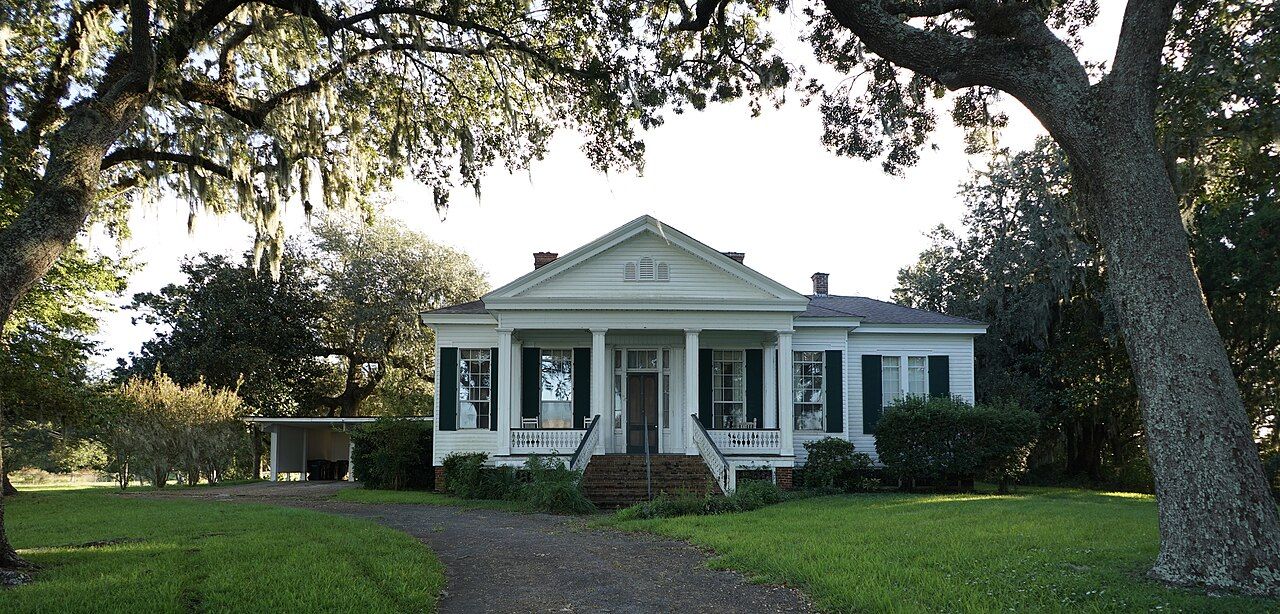
The house in the photograph above is a good example of that older building style: a raised white frame house with a deep porch, shuttered windows and oaks hung with Spanish moss. Homes like this were built for heat and damp, lifted off the ground and opened to whatever breeze the river could offer.
Further down the waterInside the cypress and tupelo swampWatching birds on the lower river
Moss Point is one of the better places on the coast to slow down and look at birds without going far. An Audubon nature center stands on the river here, with trails and exhibits about the Pascagoula and its wildlife; check its current opening times and programs before you go, as they can change.
Even without a visit there, the river edges reward patience. Great blue herons, great egrets and little blue herons hunt the shallows. Ospreys circle over open water and drop for fish, and in the warmer months you may see swallow-tailed kites cutting low over the treeline. Kingfishers rattle along the banks. In winter, ducks and other waterbirds gather on quieter stretches. Early morning and the last hour before dusk are the best times, partly for the light and partly because the birds are busier and the heat is lower. For a wider view of what turns up across the region, see the birds of the Mississippi coast.
Getting onto the water
The most satisfying way to see Moss Point is from a kayak or canoe. Public launches along the lower river and the Escatawpa give access to calm side channels where you can paddle among cypress knees and lily pads, and to the broader main river if you are confident with current and boat traffic. Read up on paddling the rivers and bayous before you set out, and leave word with someone about where you are going and when you expect to be back.
A few plain points apply on any trip here:
- The lower river is tidal, and wind against the tide can make open water choppy. Hug the banks and side channels if conditions build.
- After heavy rain upstream, the river can rise for days and the current quickens. Check river levels and the forecast before you launch.
- Alligators live throughout these waters. Give them plenty of room, never feed them, and keep pets away from the water's edge.
- Summer heat is serious. Start early, carry plenty of water, and get off the water when afternoon thunderstorms build.
- Fishing needs the right state licence, and seasons and limits change. Check the state wildlife agency before you cast.
The river that sings
Moss Point is one of the places most closely tied to the legend of the Singing River. As the story is told, the Pascagoula people, facing defeat by the neighboring Biloxi, chose to walk into the river together, singing, rather than surrender. Some people say that on quiet evenings, especially late in summer and autumn, a low humming can be heard rising from the water. Explanations have been offered over the years, but none has settled the matter, and the sound is not heard on demand. It is best taken as what it is: a legend that the river towns have kept and retold for generations. The longer version is in the Singing River and the Pascagoula people.
If you sit on a riverbank at dusk here, with the frogs starting up and the water dark and smooth, you may not hear any singing. You will still understand why the story has lasted. The river is the oldest thing in town, and on a still evening it is easy to believe it has something to say.
When to come
Late autumn through spring is the comfortable season: cooler air, fewer biting insects and good birding as migrants move through. Spring brings fresh green to the swamp and the first wildflowers along the edges. Summer is hot, humid and stormy, with lightning most afternoons, though early mornings on the water can still be beautiful. The season for tropical storms lasts from June until late autumn, and when a storm threatens, follow official advice and stay off the rivers.