Coast towns · Pascagoula
soundPascagoula, the shipyard town
Where the Pascagoula River reaches the sound, a working town builds ships, keeps the oldest standing building in Mississippi, and faces the water from a long beachfront.
Pascagoula is a working town. It sits at the mouth of the Pascagoula River, where the river splits into branches and runs into the Mississippi Sound, and for most of the last century its life has revolved around shipbuilding. It is less polished than some of its neighbors, but it has history, a long beachfront and a front-row view of one of the coast's great rivers.
A town built on ships
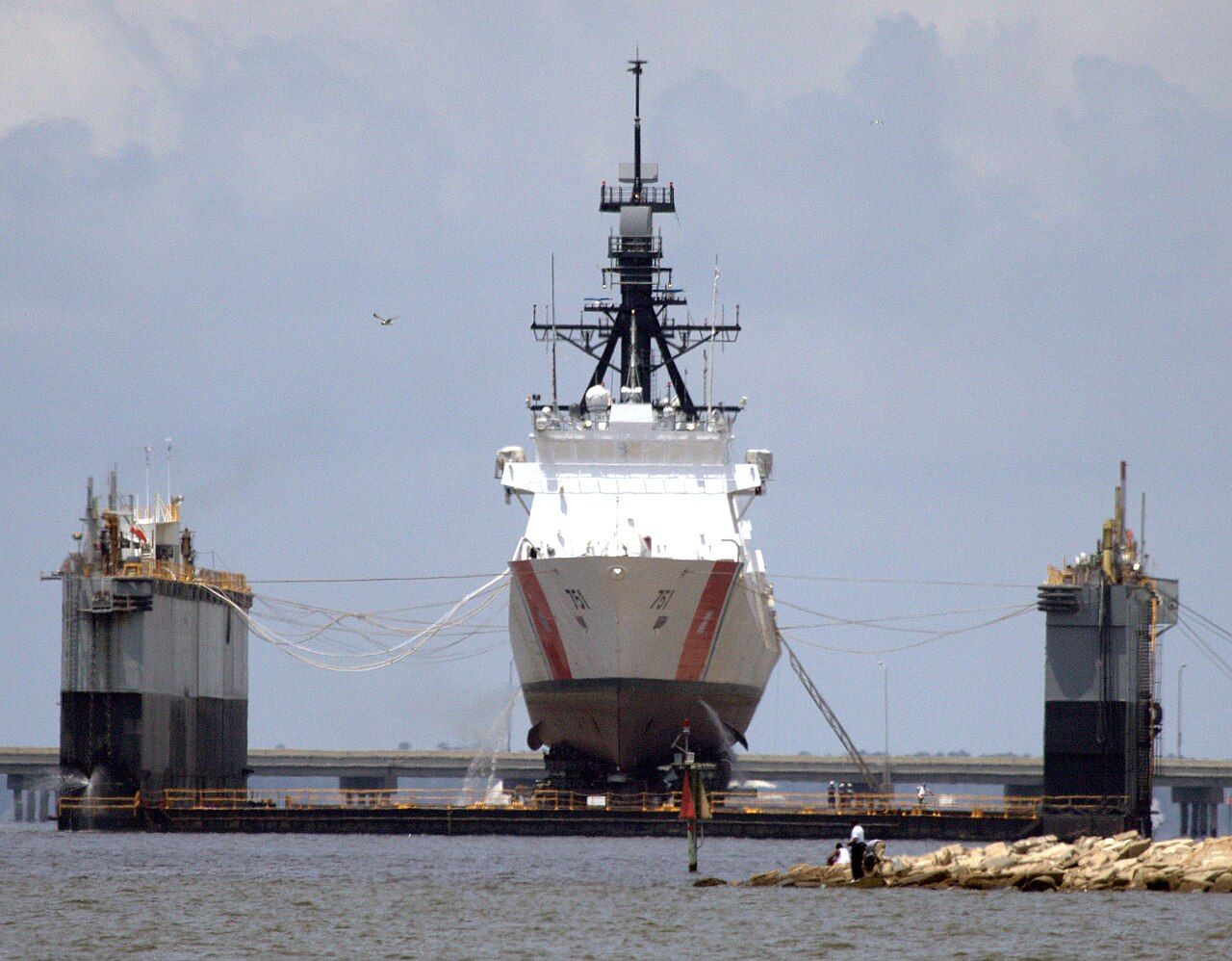
Shipbuilding has defined Pascagoula since the late 1930s, when a shipyard opened on the river's west bank. The yard grew quickly during the Second World War and has since built a long list of vessels for the US Navy and Coast Guard, from destroyers and amphibious ships to large cutters.
The shipyard is one of the largest employers in Mississippi, and its cranes dominate the skyline near the river mouth. Ships under construction, in dry dock or heading out for sea trials can often be seen from public places along the river and the shore.
Shipbuilding has brought prosperity and jobs, but also hard work and, like everything on this coast, the threat of storms. The yard was badly damaged by Hurricane Katrina and was rebuilt.
The Old Spanish Fort
Pascagoula is home to the oldest standing building in Mississippi: the La Pointe-Krebs House, long known locally as the Old Spanish Fort. Despite the nickname, it was never a fort. It was built in the mid-eighteenth century as part of a plantation settled by French colonists, and it later passed through French, British and Spanish rule.
Another landmark stands near the water. The Round Island Lighthouse once marked the approach to the river from a small island offshore. Storms left it badly damaged, and it was later moved to the mainland and restored, so you can now see it on land in town, a short distance from the river mouth.
The house is built partly of tabby, a mix of lime, sand and oyster shells, and its walls show how early settlers used materials from the shore. The building has been carefully restored, and a museum on the site explains its history and the people who lived there.
Further down the waterMoss Point, where the Escatawpa meets the PascagoulaThe beachfront
Pascagoula has a long public beachfront along the sound. A park with lawns, picnic shelters and a walking path faces the water, and the beach is shallow and calm. It is a good place for an evening walk, watching ships enter the channel, or looking for birds along the shore.
Like other beaches on the Mississippi coast, it faces the sound rather than the open Gulf, so the water is often murky and the waves small. Swim only where it is permitted, and watch for jellyfish in late summer.
From the beach you can see out toward the barrier islands on clear days. The guide to Horn and Petit Bois, the wild islands describes the nearest of them, which can be reached only by private boat.
- Heat: summer days are hot and humid; walk early or late.
- Storms: afternoon thunderstorms are common in summer. Leave the beach at the first thunder.
- Hurricane season: June to November. Follow official advice if a storm approaches.
The river mouth
The Pascagoula River reaches the sound here, after flowing south through swamps and marsh. Its lower reaches are a mix of industry and wild land: shipyards and port facilities on one side, marsh and cypress swamp on the other. The guide to the Pascagoula, an undammed river explains why the river is so special.
Near the coast the river divides. The West Pascagoula and the East Pascagoula run separately through the marsh, with islands of grass and woods between them, and the city stands on the eastern side of the river. Bridges on US 90 and the railroad cross both, and from them you can look upstream into a surprising amount of open marsh for a place so close to heavy industry.
Public launches give access to the river for boats and paddlers. Paddling near the mouth means sharing the water with large ships, tugs and barges, so stay well clear of the main channel and keep a close watch. Further upstream, the river becomes quieter and wilder.
The river is also the source of the town's best-known legend, the story of the Singing River, told on its own page: the Singing River legend.
Visiting Pascagoula
Pascagoula is easy to reach from US 90 or Interstate 10, and it makes a good base for exploring the eastern Mississippi coast. Moss Point lies just to the north, Grand Bay lies to the east, and Ocean Springs is a short drive to the west.
Spring and autumn are the most comfortable times to visit, with milder temperatures and fewer insects. Summer is hot and humid, with frequent thunderstorms, and the storm months stretch from June into November.
Pascagoula is not a resort town, and that is part of its appeal. Walk the beachfront, visit the old house, watch a ship being built or launched from a distance, and spend a little time by the river. It is a town that still makes things, and still lives by the water.