The barrier islands · Ocean Springs
bayouDavis Bayou, the national seashore on the mainland
A wooded corner of Ocean Springs where the national seashore meets the marsh, with trails, a boat launch and a visitor center, and no boat needed to reach it.
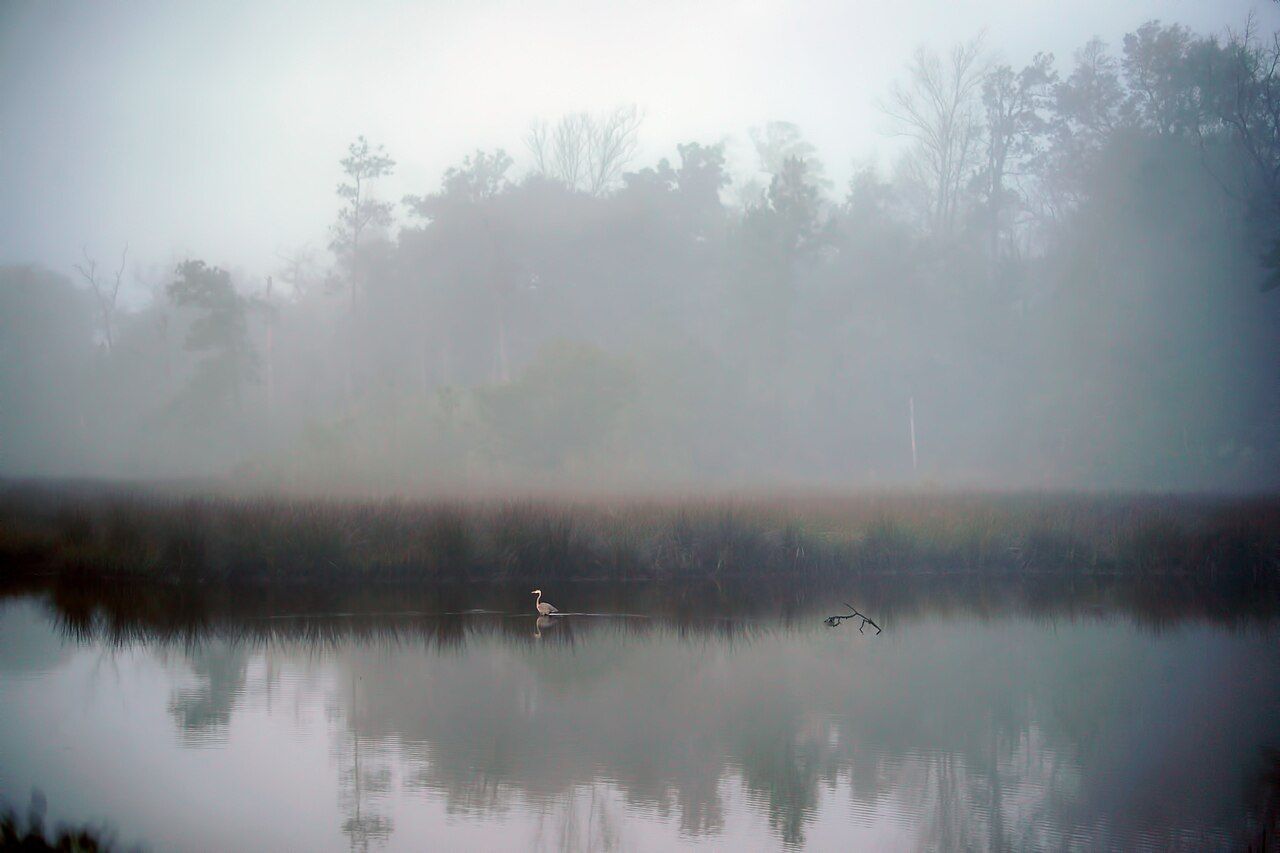
Most of Gulf Islands National Seashore lies out on the barrier islands, a boat ride away. Davis Bayou is the exception. Here, on the edge of Ocean Springs, the seashore reaches the mainland in a stretch of pine woods, live oaks, salt marsh and quiet tidal water. You can drive in, park, and within minutes be standing on a boardwalk over the marsh with herons stalking the shallows.
It is a good place for a slow morning or a gentle introduction to the coast's wild side, especially if you cannot get out to the islands. It also helps you understand them: the same national seashore manages both, and the visitor center here tells the story of the whole chain.
The visitor center
The visitor center at Davis Bayou is the main mainland base for the Mississippi side of the national seashore. Inside are exhibits on the barrier islands, the marsh and its wildlife, and the history of the coast, including Fort Massachusetts on Ship Island. Rangers can answer questions about trails, camping and the islands, and about current conditions and rules.
The days and times it opens shift through the year. Ranger programs, from guided walks to talks about the islands and the wildlife, are offered at some times of year; ask what is on when you arrive.
Trails and boardwalks
Several short trails wind through the Davis Bayou area. They pass through pine and oak woods, along the edges of the bayou and onto boardwalks that look out over open marsh. None is long or difficult, and they can easily be combined in a morning. The ground is mostly flat, though roots and soft sand can catch you out, and parts may be wet after rain or high tides.
The views change with the season and the tide. At high water the marsh looks like a broad lake edged with needlerush; at low water mud flats appear, and wading birds move in to feed. Early morning is often the best time to walk, when the air is cooler and mist sometimes lies on the bayou, as in the photograph above.
Some areas of the park may be closed or altered after storms, and boardwalks and bridges are repaired over time. Check current trail conditions at the visitor center.
Further down the waterThe rare cranes of the pine savannaBirds and alligators
Davis Bayou is one of the easiest places on the coast to watch wading birds up close. Great blue herons, great egrets, snowy egrets and tricolored herons hunt along the marsh edges. Ospreys fish the open water, and you may see them carrying fish to a high perch. Kingfishers, cormorants and, in winter, a variety of ducks also turn up. Spring and autumn bring migrating songbirds into the woods. For more on what lives along this coast, see the birds of the Mississippi coast.
Alligators live in the bayou and its side channels. They are often seen basking on the banks or floating with only their eyes and snout above the water. Watching them from a boardwalk or a safe distance is part of the experience here. A few plain rules keep everyone safe:
- Keep a good distance from any alligator, on land or in the water.
- Never feed alligators or any other wildlife; it is illegal and dangerous.
- Keep pets on a leash and away from the water's edge.
- Watch children closely near the bayou.
Snakes, including venomous species, also live in the area. Watch where you put your hands and feet, stay on trails, and give any snake room to move away.
On the water
A public boat launch gives access to Davis Bayou, and from there to the wider waters of Biloxi Bay and the Mississippi Sound. Paddlers in kayaks and canoes can explore the calm, winding bayou and its marsh channels, where it is easy to spend a few hours watching birds and drifting with the tide.
The bayou is shallow and tidal. Wind can make open stretches choppy, and the tide affects how far you can get into the side channels. In summer, heat and afternoon thunderstorms are the main concerns; start early, carry plenty of water and leave the water when storms build. For general advice, see paddling the rivers and bayous.
Fishing and crabbing are popular here. You need the appropriate state licence, and the state sets seasons, size limits and catch limits. For an overview of what anglers find along the coast, see fishing and crabbing on the coast.
Camping and practical notes
The Davis Bayou area has a campground set among the trees.
- Autumn, winter and spring are the most comfortable seasons, with milder temperatures and fewer insects.
- Mosquitoes and biting midges can be intense at dawn and dusk, particularly in warm weather. Bring repellent and consider long sleeves.
- Summer is hot and humid. Carry water even on short walks.
- From June into November the Gulf can brew storms. The park may close when a storm threatens; follow official advice.
Davis Bayou rewards a slow pace. Walk quietly, stop often, and let the marsh come to you: a heron lifting off, a mullet jumping, an alligator sliding into the water. It is a small piece of wild coast within easy reach of town, and it gives a real sense of what the national seashore protects, both here and out on the islands.