Coast towns · Ocean Springs
on landOcean Springs and the painter of the islands
A small town on the east shore of Biloxi Bay, shaded by old live oaks and shaped by an artist who spent much of his life rowing out to an empty barrier island.
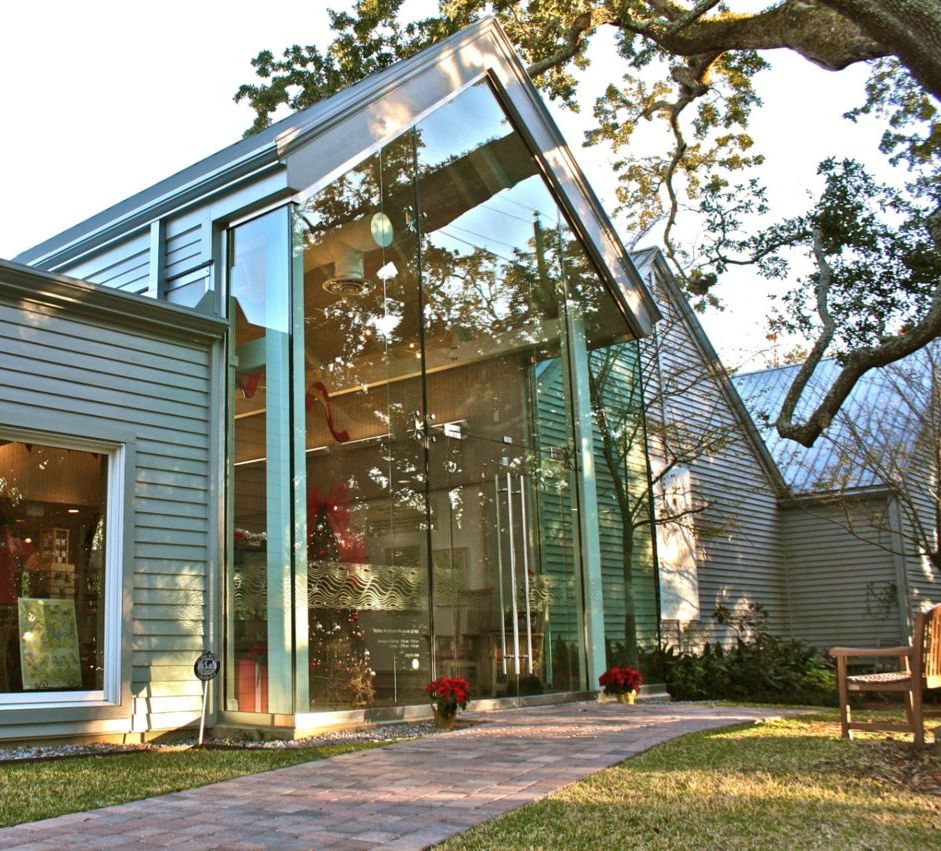
Cross the US 90 bridge east from Biloxi and the coast changes pace. The casino towers fall behind you, the road comes down among trees, and you are in Ocean Springs: a town of live oaks, small galleries, old cottages and a quiet beach on Biloxi Bay. It has a reputation as the coast's art town, and much of that reputation comes from one man, the painter Walter Anderson.
The town is small enough to walk, and walking is the best way to take it in. Give it a full day if you can: a morning at the museum, an afternoon under the oaks and along the water, and an evening at Front Beach watching the light go off the bay.
A French beginning on Biloxi Bay
Ocean Springs has some of the oldest European history on the Gulf Coast. In 1699, French colonists under Pierre Le Moyne d'Iberville built a fort on the east shore of Biloxi Bay, near today's town, as one of the first footholds of French Louisiana. The settlement did not stay long, and the colony's center soon moved elsewhere, but the bay has had people living on its shores ever since.
The town that grew here later took its name from mineral springs that drew visitors in the nineteenth century, when the railroad made the coast easy to reach from New Orleans. Summer cottages went up under the oaks, and the place settled into being a resort town and a fishing town at once. Much of that older fabric remains, set among newer homes and small businesses on shaded streets.
Walter Anderson
Walter Inglis Anderson (1903-1965) grew up in Ocean Springs, in a family deeply involved in art and craft; his brothers and family worked in pottery and decoration. He trained as a painter, worked for a time on public art, and spent much of his life drawing and painting the plants, birds, animals and weather of the coast.
What set him apart was where he chose to work. For years he would row a small boat across the Mississippi Sound to Horn Island, a wild barrier island many miles offshore, and stay there alone for days or weeks at a time. He camped simply, sheltered under his upturned boat in bad weather, and filled sketchbooks and watercolors with herons, pelicans, raccoons, insects, waves and storms. He kept written logs of those stays, and they have since been published. The island he loved is still wild, and you can read more about it in Horn and Petit Bois, the wild islands.
Anderson worked constantly and showed little of it. Much of his work came to wider attention only after his death in 1965, and his reputation has grown steadily since. Today he is one of the best known painters of the American South, and his images of coast birds and plants have become part of how the region sees itself.
For years he would row a small boat across the Mississippi Sound to Horn Island, a wild barrier island many miles offshore, and stay there alone for days or weeks at a time.
The museum and the little room
The Walter Anderson Museum of Art stands in the center of town and is the natural place to start. Its galleries show his watercolors, drawings, block prints and other work, along with changing exhibitions, and they give a good sense of how much he made and how widely his eye roamed: from the smallest beetle to a hurricane sky.
Further down the waterDavis Bayou, the national seashore on the mainlandTwo parts of the museum stand out. The first is the little room, the small room in his cottage that Anderson covered from floor to ceiling with painted murals of a single coastal day, from dawn to night. It was found only after his death, and it has been preserved so that visitors can stand inside it. The second is the Ocean Springs Community Center, the older building beside the galleries, whose walls carry large murals Anderson painted of the coast's history and wildlife. Standing in that hall, surrounded by his color, is the closest you will come to seeing the coast the way he saw it.
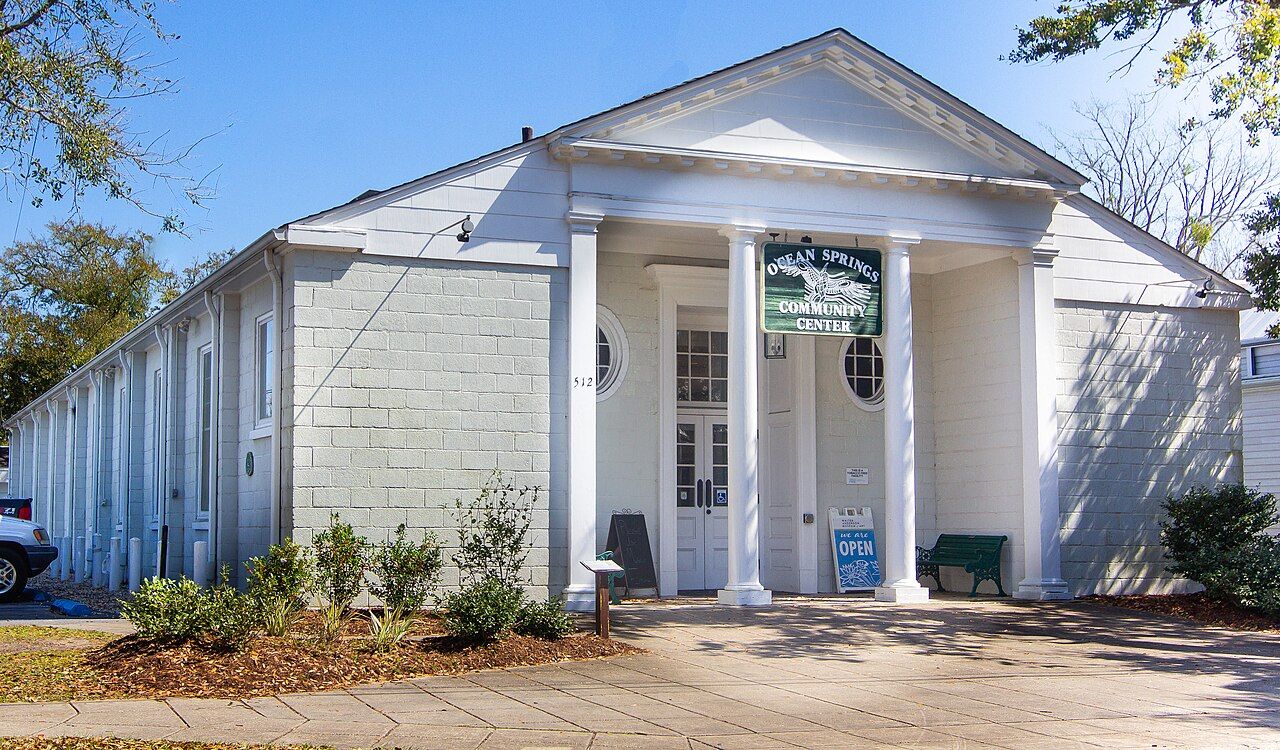

Opening times, admission and access to individual rooms can change, and parts of the collection rotate.
Under the oaks and along Front Beach
Once you leave the museum, the town itself is the attraction. Some of the finest live oaks on the coast line the older streets, their limbs spreading wide and low, ferns growing along the branches after rain. Walk slowly and look up. Many of these trees have lived through more hurricanes than anyone can count.
Head south through the neighborhoods and you reach Front Beach, a long strip of sand and seawall facing Biloxi Bay and the Sound. It is not the open Gulf: the water is shallow and calm most days, often brownish from the rivers, and the view runs across to Deer Island and the Biloxi shore. People walk the beach road, fish from the piers, and sit out at sunset. The harbor nearby shelters working boats and pleasure craft side by side.
Front Beach and much of the waterfront were badly damaged by Hurricane Katrina in 2005, when the storm surge pushed far inland along the bay. The town rebuilt, and the shoreline today is open and well used, but older residents remember the storm clearly. The coast's long relationship with hurricanes is told more fully in hurricane season, plainly.
Beyond the town
Ocean Springs makes a good base for the eastern half of the coast. A short drive east brings you to the Davis Bayou area of Gulf Islands National Seashore, with its visitor center, trails and marsh views. Farther out on the horizon lie the barrier islands that drew Anderson, and to the west, across the bridge, the lighthouse and old waterfront of Biloxi beyond the casinos.
If you want to follow Anderson's eye a little further, spend an early morning on the marsh edge with a sketchbook or a camera. Watch a heron work a shallow channel, or the way light moves on the water as the wind shifts. That is exactly the kind of moment he spent his life trying to get onto paper.
Front Beach, midges and storm season
- The cooler months, from autumn through spring, are the most comfortable for walking. Summer is hot and humid, with frequent afternoon thunderstorms.
- The town hosts arts festivals and seasonal events that fill the streets and parking.
- Bring sun protection for Front Beach, which has little shade.
- Mosquitoes and biting midges can be fierce near the marsh at dawn and dusk. Repellent helps.
- The Atlantic storm season covers June to November, with the busiest weeks usually late in the summer. If a storm threatens, follow official advice.